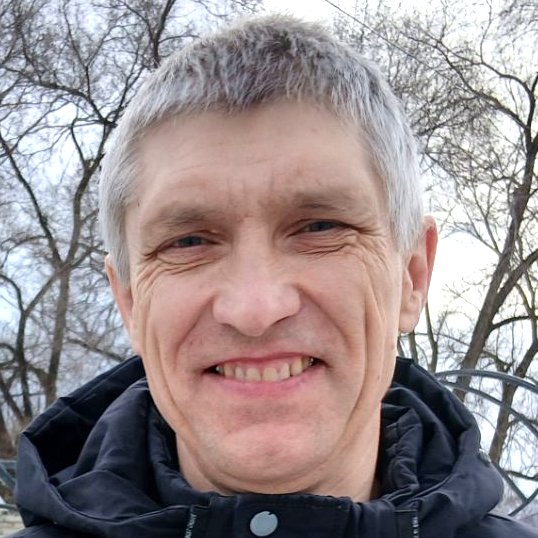
Biography
A search, custody, house arrest and a ban on communicating and living with his family — all of this has become a new chapter in the life of Yevgeniy Bagin, a resident of a small village on the banks of the Yenisei River.
Yevgeniy was born in the city of Norak (Tajik SSR). His father worked on the construction of two hydroelectric power plants in the region, and his mother worked in retail. Yevgeniy has a younger brother. His parents have passed away; his mother suffered from dementia during the last year of her life and Yevgeniy cared for her.
The family moved to Khakassia in 1981 due to political unrest in the Tajik Republic, which later escalated into an armed conflict. They settled in Sayanogorsk. At that time, work was underway on the Sayano‑Shushenskaya Hydroelectric Power Plant, and Yevgeniy's father worked on its construction.
As a teenager, Yevgeniy learned the bayan and liked playing football and volleyball. After finishing school, he qualified as an auto mechanic at an agricultural college, though he did not work in that field. At first, he worked as a loader, then as a firefighter. Later he was injured but kept working in the service as a radio operator. He has been retired since 2018.
Yevgeniy married in 1997. About a year later, the young family moved to the village of Maina, where the mother of his wife, Zoya, lived. In 1998, the couple's first daughter was born, and six years later, another daughter. Both young women work in the beauty industry — as a hairdresser and a nail technician. Zoya is a math teacher with many years of experience and enjoys playing the piano. She loves working in the garden. Before the criminal prosecution began, Yevgeniy, his wife, and their daughters traveled together, went on picnics and spent time with friends, and also went to the cinema and the swimming pool.
Zoya believed in God and saw how her prayers were answered. Therefore, when her mother began to study the Bible, she — and Yevgeniy — decided to join. As Yevgeniy recalls, the logic and simplicity of Bible teachings, as well as the pleasant association with believers, influenced his outlook on life. According to the couple, applying the Bible's counsel helped them keep their family together. In 2003, Yevgeniy, Zoya, and her mother were baptized as Jehovah's Witnesses. The couple also instilled Christian values in their daughters.
The criminal prosecution split the family in September 2025. By court order, Yevgeniy was first placed in a pretrial detention center and then under house arrest in accommodation separate from his family. Shortly before the searches, Zoya had undergone major brain surgery and needed her husband's care. "I cannot support my wife during this difficult period in her life or look after her health," the believer expressed his anxiety. "Our family has never been apart for so long. By court order, my loved ones are not even allowed to talk to me."
Yevgeniy is also concerned about his own health problems: he has lung and heart conditions and worries that the prosecution will prevent him from receiving the necessary medical care.